
Artificial Intelligence (AI) is changing the way businesses approach digital marketing. From creating content and analyzing customer behavior to automating campaigns and improving advertising performance, AI helps marketers work faster, smarter, and more efficiently.
Today, businesses of all sizes can use AI-powered tools to understand their audience, personalize customer experiences, generate ideas, and make data-driven marketing decisions. AI is not replacing digital marketers—it is helping them become more productive and strategic.
What Is AI in Digital Marketing?
AI in digital marketing refers to using artificial intelligence technologies to automate tasks, analyze large amounts of data, understand customer behavior, and improve marketing strategies.
AI can identify patterns in customer data and provide insights that would take humans much longer to discover. It can also assist with tasks such as content creation, search engine optimization, social media management, email marketing, advertising, and customer support.
” AI is a tool, it’s a technology. It is as useful as the person putting it to work.”
– Clark Boyd, Founder at Novela & Marketing and Management Professor
How AI Is Used in Digital Marketing
1. AI-Powered Content Creation
AI tools can help marketers generate blog ideas, social media captions, email drafts, product descriptions, ad copy, and other marketing content.
Instead of creating everything from scratch, marketers can use AI in digital marketing to generate initial ideas and drafts, then add their own expertise, creativity, and brand voice.
2. Personalized Marketing
Customers expect brands to provide relevant experiences. AI can analyze customer interests, browsing behavior, previous purchases, and interactions to help businesses deliver more personalized content.
For example, an e-commerce business can recommend products based on a customer’s previous activity.

3. SEO and Search Optimization
AI in digital marketing can support SEO by helping marketers research topics, identify keywords, analyze competitors, organize content, and understand search intent.
AI is also changing how people search for information through conversational search and AI-powered search experiences. This makes it increasingly important for marketers to create useful, authoritative, and well-structured content.
4. Social Media Marketing
AI can make social media management more efficient by helping with:
Content ideas
Caption creation
Hashtag research
Content scheduling
Audience analysis
Performance analysis
Trend identification
Marketers can spend less time on repetitive tasks and more time developing creative campaigns and engaging with their audience.
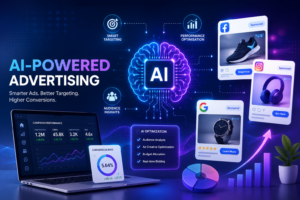
5. AI-Powered Advertising
AI in digital marketing can analyze advertising data and help marketers improve targeting, bidding, creative testing, and campaign performance.
Platforms such as Google Ads and Meta Ads increasingly use machine learning to optimize campaigns based on business goals and user behavior.
6. Chatbots and Customer Support
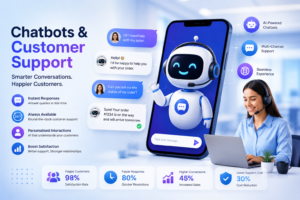
AI-powered chatbots can answer frequently asked questions, provide product information, assist customers, and collect leads.
This allows businesses to provide support around the clock while reducing the amount of repetitive work handled manually.
7. Data Analysis and Marketing Insights
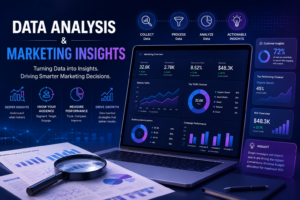
Digital marketing produces enormous amounts of data. AI can analyze this information quickly and identify patterns and trends.
Marketers can use these insights to understand:
Which campaigns perform best
Which audiences are most engaged
Where customers drop off
Which content generates the most traffic
Which channels produce the best results
Benefits of AI in Digital Marketing
Saves Time
AI can automate repetitive marketing activities, allowing marketers to focus on strategy and creativity.
Improves Efficiency
Tasks that previously required hours of manual work can often be completed much faster with AI assistance.
Better Customer Personalization
AI helps businesses understand customer preferences and provide more relevant experiences.
Data-Driven Decisions
AI can process large amounts of information and help marketers make decisions based on data rather than assumptions.
Increased Productivity
When used correctly, AI allows marketers to handle more campaigns, content, and analysis without increasing their workload proportionally.
Challenges of Using AI in Digital Marketing
Although AI offers many advantages, it should not be used without human supervision.
Lack of Human Creativity
AI can generate content quickly, but human creativity, emotions, experiences, and brand understanding remain important.
Accuracy Issues
AI-generated information can sometimes be incorrect . Marketers should always review and verify important information.
Privacy Concerns
Businesses need to handle customer data in a responsible way and follow applicable privacy and data-protection requirements.
Overdependence on AI
Using AI for every marketing decision can make content feel generic. The best results usually come from combining AI capabilities with human expertise.
The Future of AI in Digital Marketing
AI will continue to influence digital marketing as businesses adopt more advanced automation, personalization, predictive analytics, and AI-powered search technologies.
Successful marketers will not simply use AI in digital marketing to produce more content. They will use it to understand customers better, identify opportunities, improve campaigns, and make smarter decisions.
The future of digital marketing is therefore likely to be a combination of AI efficiency and human creativity.
Conclusion
AI in digital marketing is becoming an important part of modern digital marketing. It can help businesses create content, understand customers, optimize campaigns, analyze data, automate repetitive tasks, and improve marketing performance.
However, AI works best as a marketing assistant rather than a complete replacement for human marketers. The strongest strategies combine AI-powered tools with human creativity, strategic thinking, authenticity, and industry knowledge.
For businesses and digital marketers, learning how to use AI effectively today can create a significant advantage in an increasingly competitive digital landscape.