
Social media has become one of the most powerful ways for businesses to connect with their customers. Platforms such as Instagram, Facebook, LinkedIn, YouTube, and TikTok allow brands to build awareness, engage with their audience, generate leads, and increase sales.
Social media marketing is the process of promoting a business, product, or service through the available social media platforms. With the right strategy, businesses of all sizes can reach their target audience, build strong relationships, and grow their online presence.
In this guide, we will explore what social media marketing is, why it is important, the most effective strategies, and how businesses can use social media to achieve their marketing goals.
What Is Social Media Marketing?
Social media marketing is a digital marketing strategy that uses social networking platforms to promote a brand and communicate with potential and existing customers.
It can include:
Creating and sharing valuable content
Building a social media community
Running paid advertising campaigns
Increasing brand awareness
Generating leads and website traffic
Engaging with customers
Promoting products and services
Analyzing campaign performance
Social media marketing is not simply about posting regularly. Successful marketing requires understanding your audience, choosing the right platforms, creating relevant content, and continuously measuring results.
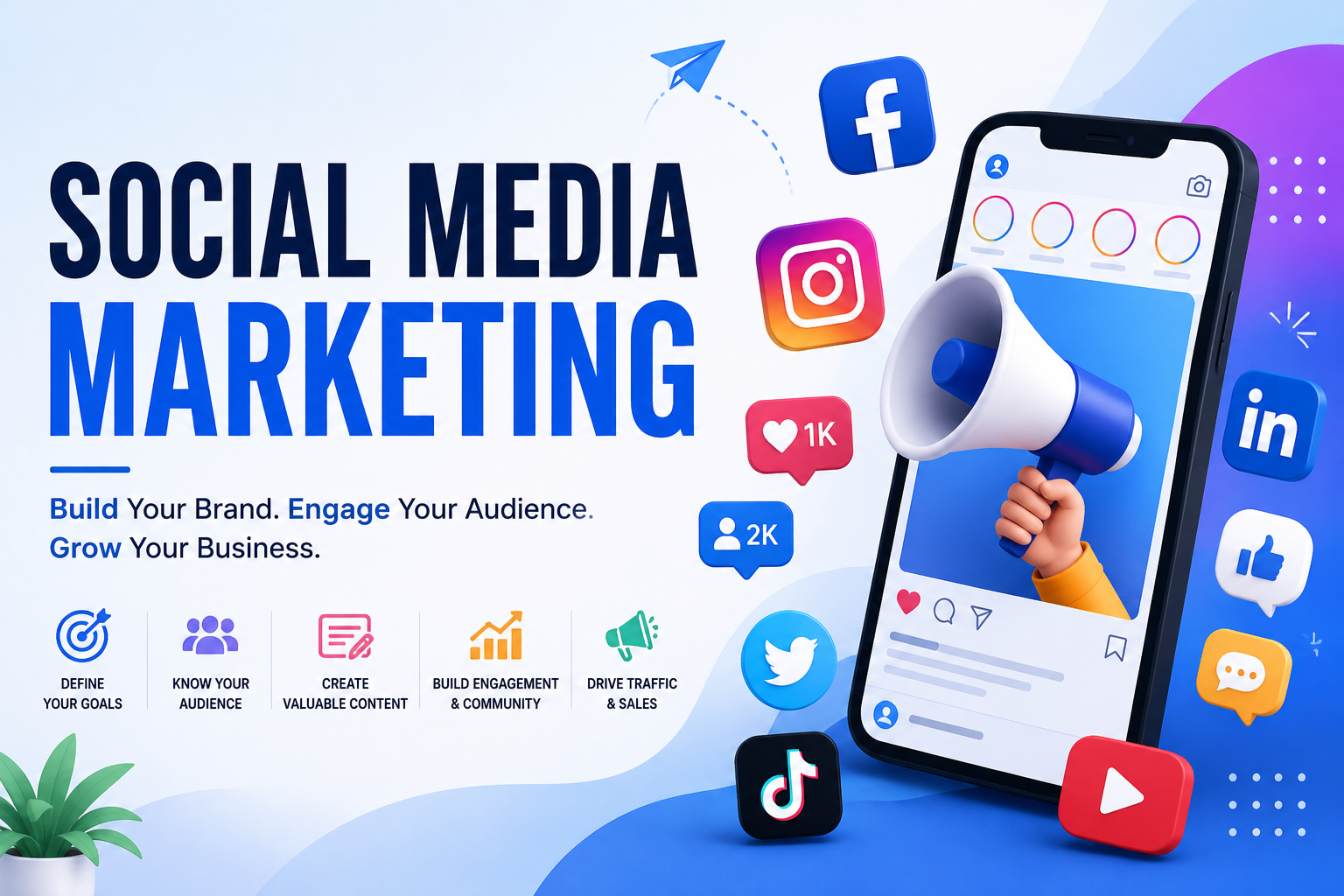
Why Is Social Media Marketing Important?
1. Builds Brand Awareness
Social media gives businesses an opportunity to introduce their brand to a large audience. Consistent and engaging content can help people recognize and remember your business.
2. Helps You Reach Your Target Audience
Social media platforms provide powerful targeting options. Businesses can reach audiences based on factors such as interests, location, demographics, behavior, and online activity.
3. Increases Customer Engagement
Social media allows businesses to communicate directly with their customers through comments, messages, polls, stories, and other interactive content.
4. Generates Leads
Businesses can use social media to attract potential customers and direct them toward websites, landing pages, forms, products, or services.
5. Drives Website Traffic
Sharing useful content and promotions on social media can encourage users to visit your website, blog, online store, or landing page.
6. Supports Business Growth
A strong social media presence can increase visibility, build credibility, strengthen customer relationships, and ultimately contribute to business growth.
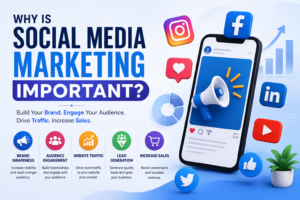
Popular Social Media Platforms for Marketing
Different platforms are suitable for different audiences and marketing objectives.
Instagram is particularly useful for visual content, Reels, Stories, product promotion, influencer marketing, and brand building.
Facebook can be effective for community building, business pages, advertising, local businesses, and reaching a broad audience.
LinkedIn is ideal for B2B marketing, professional networking, personal branding, recruitment, and sharing industry expertise.
YouTube
YouTube is powerful for video marketing, educational content, tutorials, product demonstrations, reviews, and long-form content.
TikTok
TikTok focuses heavily on short-form video and can help brands reach new audiences through creative and entertaining content.
The best platform depends on your target audience, industry, content format, and marketing goals.
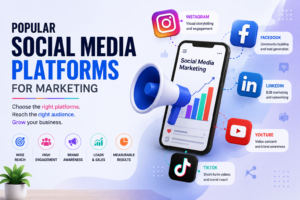
How to Create a Social Media Marketing Strategy
Step 1: Define Your Goals
Start by identifying what is wanted to be achieved.
Your goals could include:
Increasing brand awareness
Growing followers
Generating leads
Increasing website traffic
Improving engagement
Increasing sales
Building a community
Your goals should be specific and measurable.
Step 2: Understand Your Target Audience
Before creating content, understand who you want to reach.
Consider:
Age
Location
Interests
Occupation
Problems and challenges
Buying behavior
Preferred social platforms
Knowing your audience helps you create content that is more relevant and engaging.
Step 3: Choose the Right Platforms
You don’t need to be active on every social media platform.
Choose platforms where your target customers are most likely to spend their time.
For example, a professional service provider may benefit from LinkedIn, while a fashion or beauty business may focus more heavily on Instagram.
Step 4: Create Valuable Content
Content is at the heart of social media marketing.
Some popular content formats include:
Educational posts
Reels and short videos
Infographics
Carousels
Behind-the-scenes content
Customer testimonials
Product demonstrations
Polls and quizzes
Industry tips
User-generated content
The goal is to provide content that informs, entertains, inspires, or helps your audience.
Step 5: Maintain Consistency
Consistency helps your audience become familiar with your brand.
Create a social media content calendar to plan our posts in advance. A content calendar can help you organize topics, posting dates, captions, visuals, campaigns, and hashtags.
Step 6: Engage With Your Audience
Social media should be a two-way conversation.
Respond to comments and messages, answer questions, acknowledge feedback, and participate in relevant conversations.
Strong engagement can help create a loyal online community.
Step 7: Analyze Your Performance
Regularly monitor your social media metrics to understand what is working.
Important metrics include:
Reach
Impressions
Engagement rate
Follower growth
Website clicks
Leads
Conversions
Video views
Use these insights to improve your future content and campaigns.
Organic vs Paid Social Media Marketing
There are two major approaches to social media marketing: organic marketing and paid advertising.
Organic Social Media Marketing
Organic marketing involves creating and sharing content without directly paying for advertising.
Examples include:
Regular posts
Stories
Reels
Community engagement
Educational content
Customer interactions
Organic marketing is useful for building long-term relationships and brand loyalty.
Paid Social Media Marketing
Paid social media marketing involves paying platforms to display advertisements to selected audiences.
Paid campaigns can help businesses:
Reach new customers
Generate leads
Promote products
Increase website traffic
Drive conversions
Retarget previous visitors
A combination of organic content and paid advertising can create a more effective social media strategy.
Social Media Marketing Tips for Small Businesses
Small businesses don’t necessarily need a huge marketing budget to build a strong social presence.
Here are some useful strategies:
1. Focus on your niche: Create content specifically for your ideal customers.
2. Show your personality: Authentic content can help make your brand more relatable.
3. Use short-form video: Reels and other short videos can be effective ways to attract attention.
4. Share customer experiences: Testimonials and reviews can build trust.
5. Educate your audience: Share practical tips related to your products or services.
6. Test different content: Experiment with different formats, topics, hooks, and posting styles.
Common Social Media Marketing Mistakes
Avoiding common mistakes can improve your social media performance.
Posting Without a Strategy
Posting randomly without clear goals can make it difficult to measure results.
Focusing Only on Promotion
People don’t want to see advertisements in every post. Mix promotional content with educational, entertaining, and informative content.
Ignoring Your Audience
Social media is about communication. Ignoring comments and messages can reduce customer engagement.
Using the Same Content Everywhere
Each platform has its own audience and content style. Adapt your content instead of simply copying the same post across every platform.
Not Tracking Results
Without analytics, you won’t know which content is producing results.
The Role of AI in Social Media Marketing
Artificial intelligence is changing how marketers plan, create, and analyze social media content.
AI tools can assist with:
Generating content ideas
Writing captions
Creating content calendars
Analyzing audience data
Developing ad copy
Repurposing content
Identifying trends
Automating certain customer interactions
However, AI should support your strategy rather than completely replace creativity and human communication. Original ideas, brand personality, and genuine customer interaction remain important.
Future of Social Media Marketing
Social media marketing continues to evolve as user behavior, technology, and platform features change.
Some important trends include:
Short-form video content
AI-assisted content creation
Social commerce
Personalized content
Influencer and creator marketing
Community-based marketing
Social search
Data-driven marketing
Interactive content
Businesses that consistently adapt their strategies can stay competitive and maintain meaningful relationships with their audiences.
Conclusion
Social media marketing is an important part of modern digital marketing. It allows businesses to increase visibility, connect with customers, build trust, generate leads, and support business growth.
The key to successful social media marketing is not simply posting more content. It is about reaching the right audience, providing valuable content, engaging consistently, and using data to improve your strategy.
Whether you are a startup, small business, freelancer, or established brand, a well-planned social media strategy can help you build a stronger online presence and achieve your marketing goals.
Ready to grow your brand on social media? A strategic combination of content creation, audience engagement, paid advertising, and performance analysis can turn your social media presence into a powerful marketing channel.